

GAME STUDIES / Spatial Guidance & Player Experience
Game Studies · Exploration & Player Experience


01 / Motivation & Design
02 / Spatial Guidance
03 / Player Experience
VIDEO / Talks & Case Studies
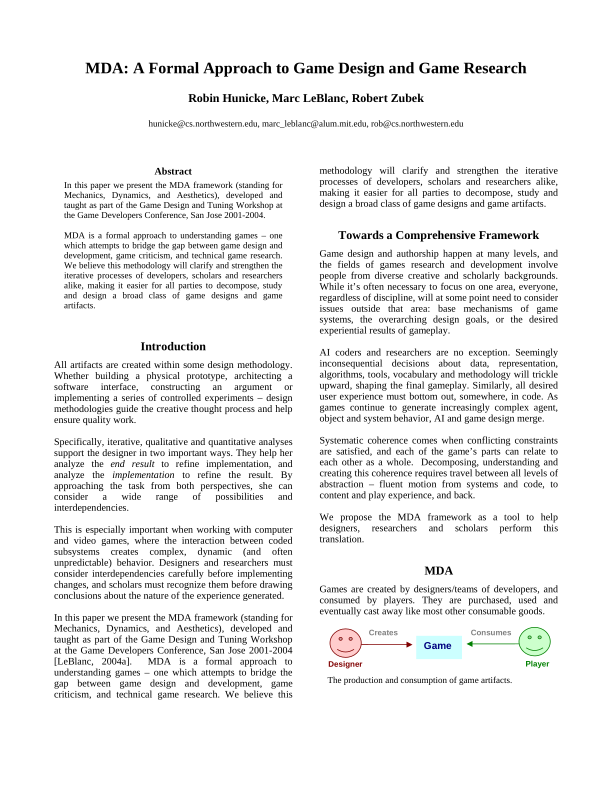
 mda.pdf
 motivational-pull.pdf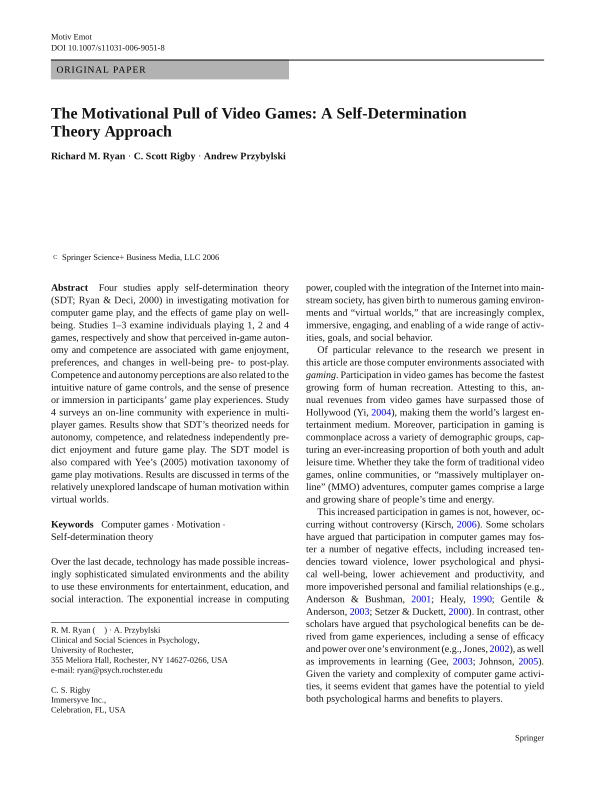
 How to Read This Section
How to Read This Section
Make ‘fun’ specific
Start with MDA: distinguish the rules, behavior during play, and experiences you hope to evoke.
Ask about motivation
Read the SDT paper on the right. Do players feel autonomy, competence, and relatedness?
Turn concepts into observations
Which behaviors support your interpretation? Combine questionnaires with recordings, routes, and interviews.
This is a proposed reading path, not a settled conclusion.
M / D / A: A Feature Is Not an ExperienceM / D / A: A Feature Is Not an Experience
Reading notes · MDA, PDF page 2
Mechanics
Executable rules, actions, and resources.
Dynamics
The behavior that emerges as rules and player actions interact.
Aesthetics
The emotions players feel and the intended experience.
My design inference: the same collecting feature may invite exploration or feel like a checklist. Observe the dynamics before discussing the experience.
Freedom of Choice or Choice Overload?Freedom of Choice or Choice Overload?
Reading notes · Ryan et al. (2006), PDF page 1
The paper uses autonomy, competence, and relatedness as key perspectives on game motivation.
Autonomy: Can I decide what to do next?
Competence: Do I understand the feedback and feel I am improving?
Relatedness: Do I care about other players or characters?
Open question: do extra branching paths increase autonomy or leave beginners less certain? The number of paths is not a substitute for perceived autonomy.
An Observable Exploration LoopAn Observable Exploration Loop
My design draft
Notice a clue → choose a route → reach a new place → discover another opportunity to observe.
Experience goals
Curiosity, brief uncertainty, and reorientation.
Validation reminder
Moving more does not necessarily mean greater engagement; it may mean being lost. Examine both behavior and the player's explanation.
 T-Junction · Before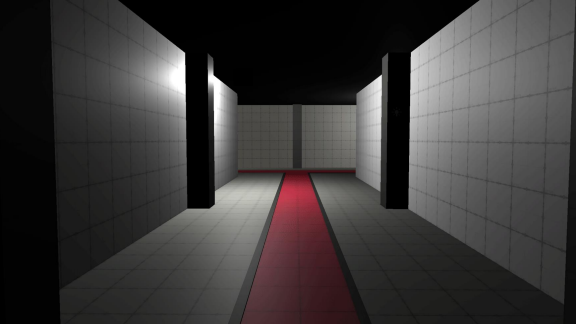
David Shaver · Presentation PDF, page 128
Leading Lines · After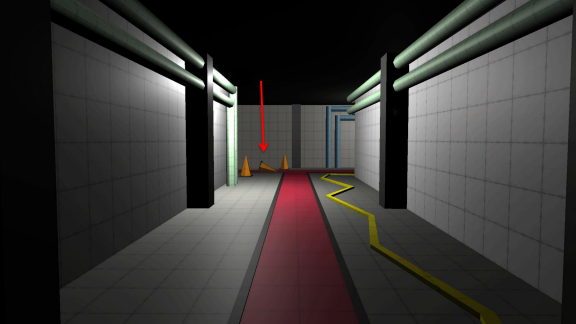
David Shaver · Presentation PDF, page 130
invisible-intuition.pdf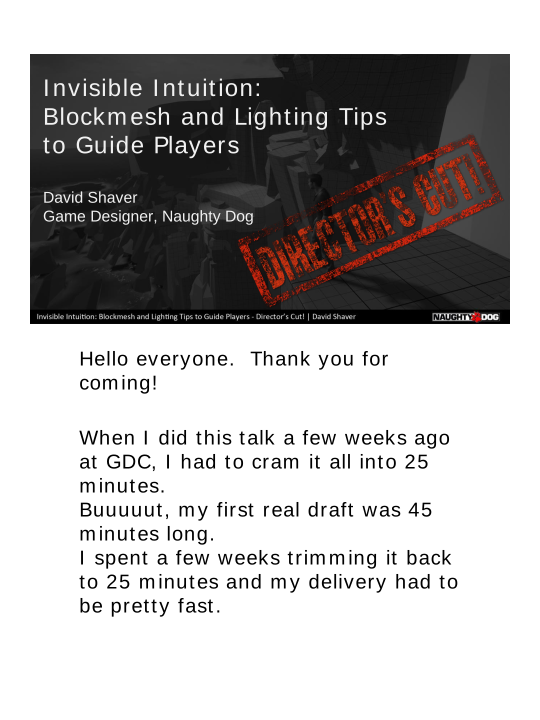 Layers of Guidance: Observe, Then Explain
Layers of Guidance: Observe, Then Explain
Reading notes · Invisible Intuition
The presentation compares blockouts with finished scenes to discuss readability, affordances, visual language, landmarks, and leading lines.
My analysis sequence:
1. What does the player notice first?
2. Which object suggests an interaction?
3. Which clue remains useful after a turn?
4. Can the player reorient after losing the way?
Record ‘the designer intended a right turn’ separately from ‘the player turned right.’
Case Comparison · A Short HikeCase Comparison · A Short Hike
Case observation task · No measured findings
Images come from the game's official press kit.
Image layer
Mark distant terrain, foreground paths, and explorable edges.
Behavior layer
During actual play, record when you leave the main route and why you return.
Design layer
Compare environmental cues with explicit goals. Promotional screenshots alone cannot establish player behavior.
Source: https://ashorthike.com/press/
A Short Hike · Paths and Vistas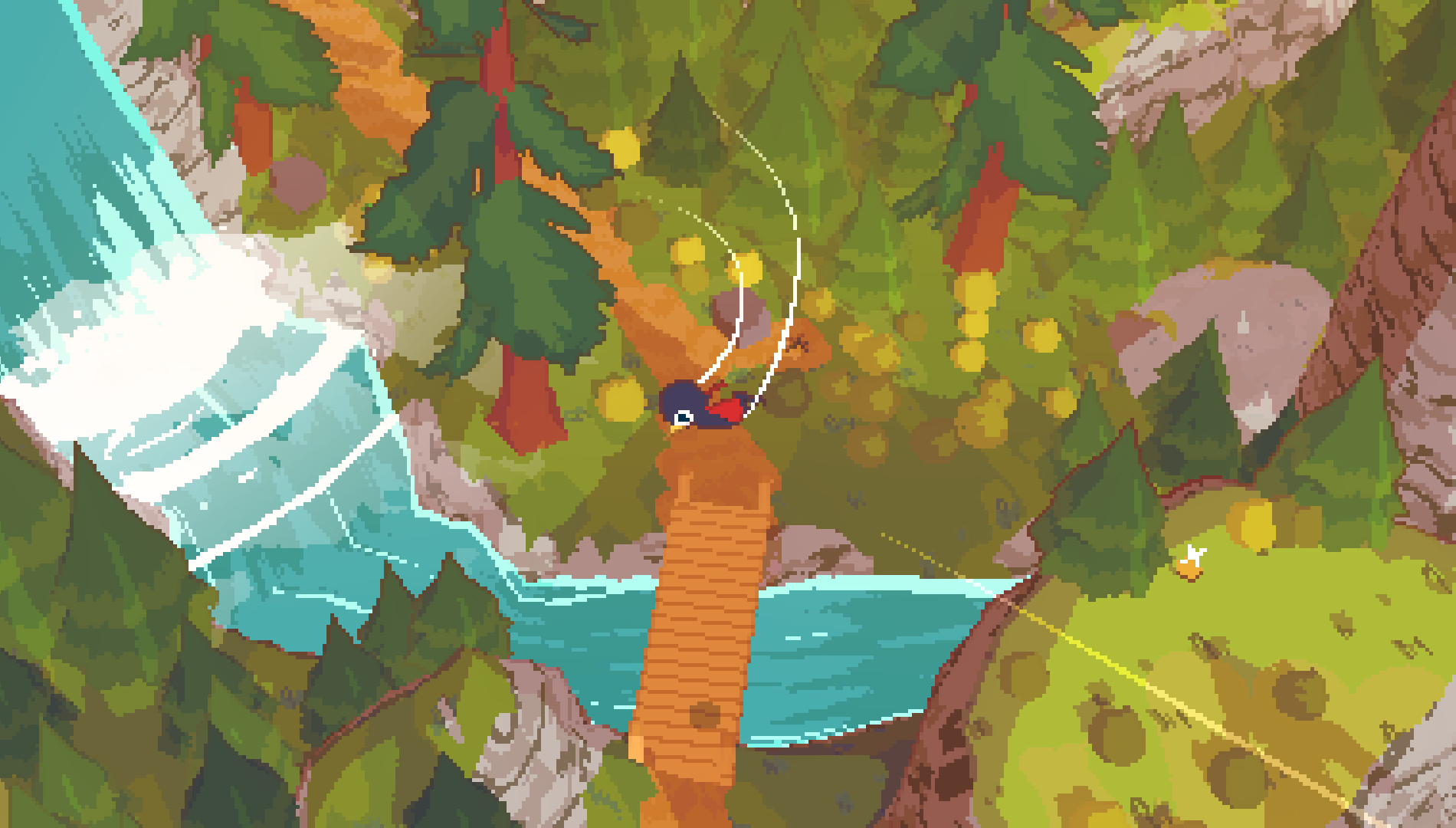
Adam Robinson-Yu · Official game screenshot
A Short Hike · Scale of Exploration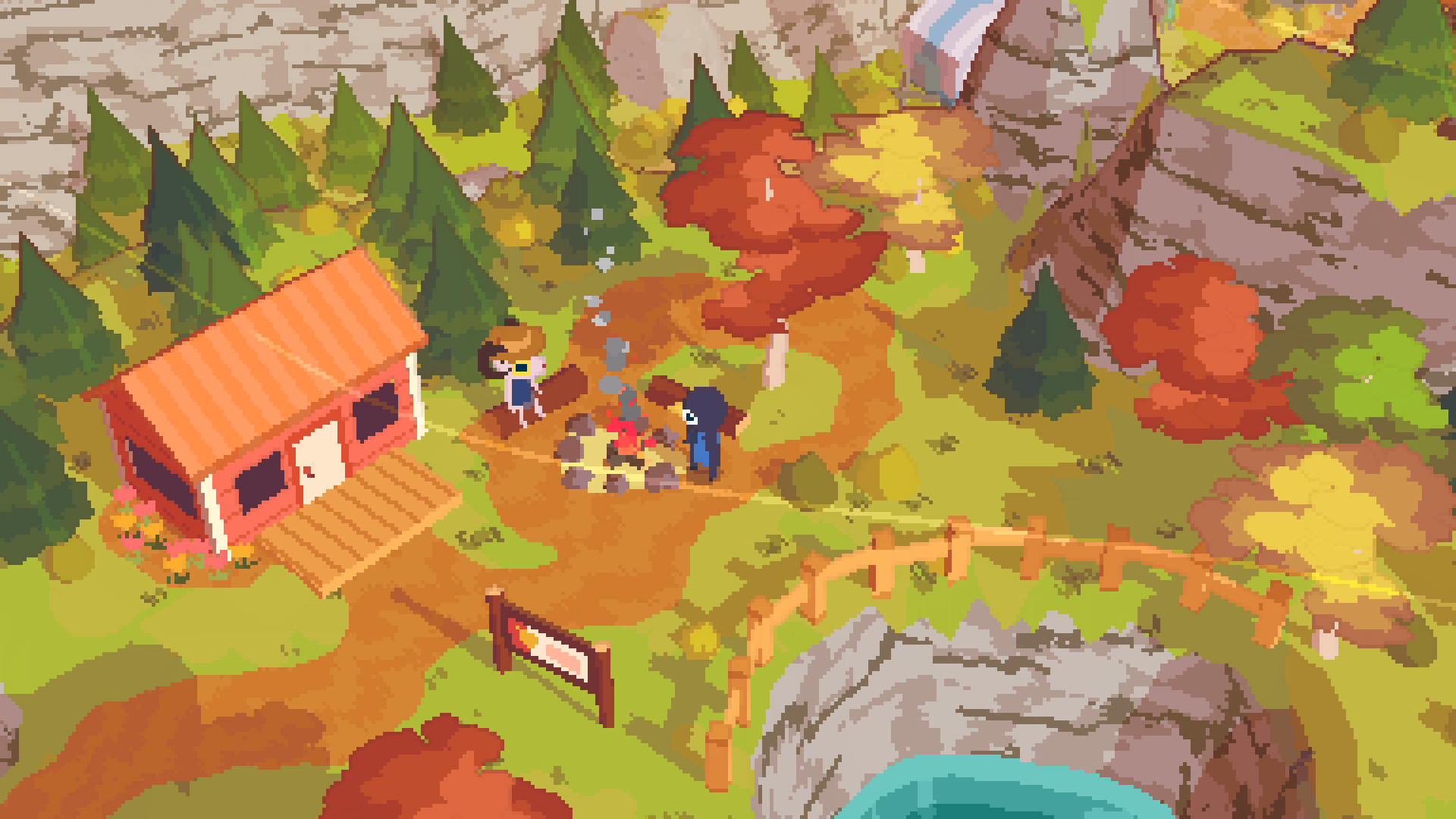
Official press kit · Compare destinations and routes
An Analysis Sheet for Visual CuesAn Analysis Sheet for Visual Cues
My draft coding framework
Cue types: landmarks / lighting / composition / movement / sound.
Record where each cue appears, whether the player notices it, what they do next, and whether extra hints are needed.
Levels of evidence: screenshot observations → personal play notes → player testing.
One screenshot can support several interpretations. Keep competing explanations.
mini-pxi.pdf Small Pilot · Study Design
Small Pilot · Study Design
Proposed study · No recruitment or experimental results yet
Research question
Can environmental guidance help beginners reorient while preserving a sense of autonomy?
A / B conditions
Use the same blockout map, controls, and goal. Change only visual guidance cues.
Order control
Counterbalance A→B and B→A, and record prior gaming experience.
Procedure
Learn the controls → explore for 10 minutes → experience questionnaire → recall the map → short interview.
Start with a feasibility pilot to check the task and recording methods. Determine sample size and the statistical plan before the formal study.
Observe More Than Completion TimeObserve More Than Completion Time
Proposed observation measures
Behavioral records
First viable route choice; repeated backtracking; voluntary exploration of side paths; requests for help; finding a landmark again.
Subjective experience
Descriptions of autonomy, competence, and goal clarity.
Interview prompts
‘Where did you think you could go just then?’
‘Which turn felt least certain?’
Faster completion may reflect familiarity or less exploration. Do not automatically interpret it as a better experience.
Questionnaires Are One Part of the EvidenceQuestionnaires Are One Part of the Evidence
Reading notes · miniPXI, article abstract
miniPXI is an 11-item short scale covering the 11 constructs of PXI.
A short scale suits time-limited evaluations, but reliability and sensitivity involve trade-offs.
My research plan: read the original items and scoring method before choosing the full or short scale. Use the official items; do not present self-written questions as a validated scale.
Add open-ended interviews to understand how players explain their actions.
Alternative Explanations and Study BoundariesAlternative Explanations and Study Boundaries
Research memo
Gaming experience, visual recognition, control familiarity, and task order may all influence route choices.
Hints from a nearby researcher may change behavior.
Findings from one blockout scene do not automatically generalize to all open worlds.
Specify the analysis plan, exclusion rules, and recording fields before testing.
Semester Reading and Making RoadmapSemester Reading and Making Roadmap
My draft research plan
01 / Literature review
MDA → SDT → spatial guidance → player experience measurement.
Output: sourced concept cards and a glossary.
02 / Case playthroughs
A Short Hike and Firewatch.
Output: route records, annotated screenshots, and competing explanations.
03 / Blockout prototype
Build two guidance conditions in the same space.
Output: comparable tasks and control procedures.
04 / Pilot
Check whether questions are understandable and data can be recorded.
05 / Prepare the formal study
Discuss the research question, sample, and analysis methods with my supervisor.
After every reading, ask: which design decision did this evidence change?
My Thesis FocusMy Thesis Focus
Draft research direction
Working topic
How does environmental guidance affect reorientation and perceived autonomy in exploration games?
Design tension
Clearer routes may reduce getting lost, but also limit the desire to explore.
Expected contribution
Reusable blockout conditions, a coding framework, and a pilot method.
Still undecided
Target players; whether maps are allowed; number of accessible side paths; study scale.
Write Hypotheses, Then Seek CounterexamplesWrite Hypotheses, Then Seek Counterexamples
Hypotheses to test · Not conclusions
H1: a continuously visible landmark may reduce unproductive backtracking.
H2: visual guidance may improve goal clarity without increasing perceived autonomy.
Counterexample: a beginner follows the light but says they felt ‘steered.’
Next step: define the records and questions corresponding to each concept.
 YouTube · GDC Festival of Gaming
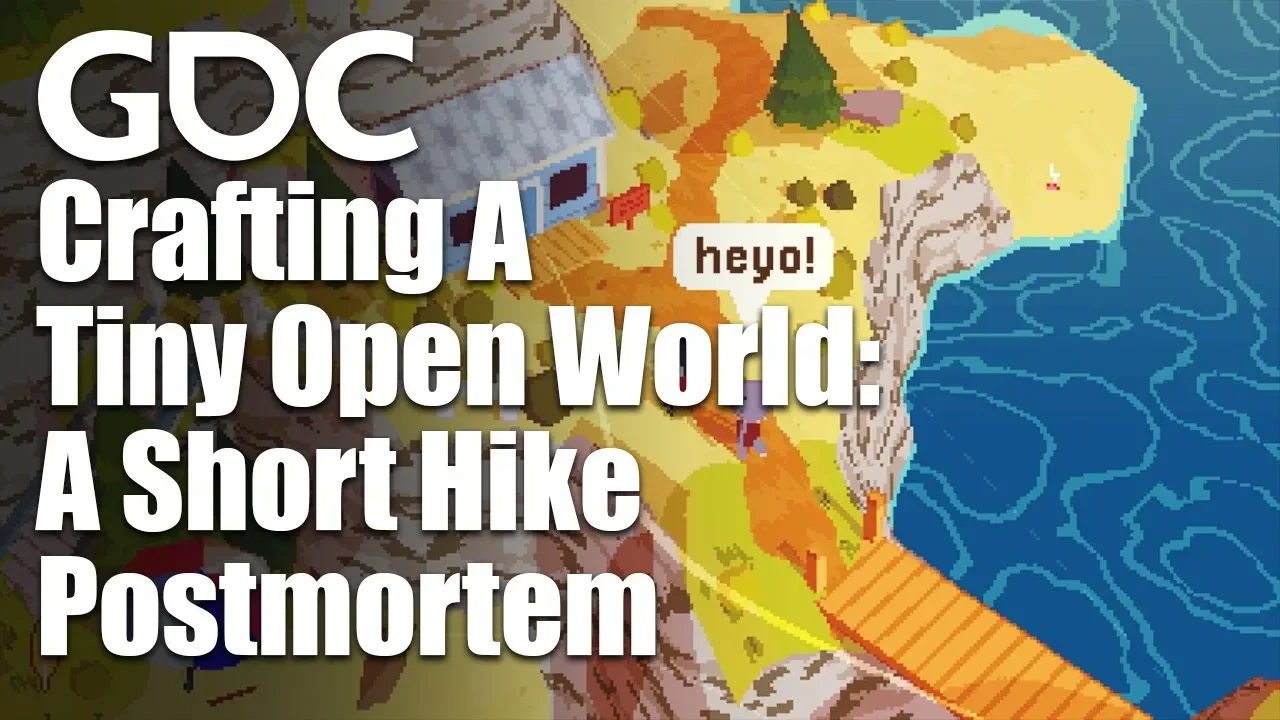 31:07
31:07A Short Hike · Development Retrospective
Adam Robinson-Yu · GDC 2020
YouTube · GDC Festival of Gaming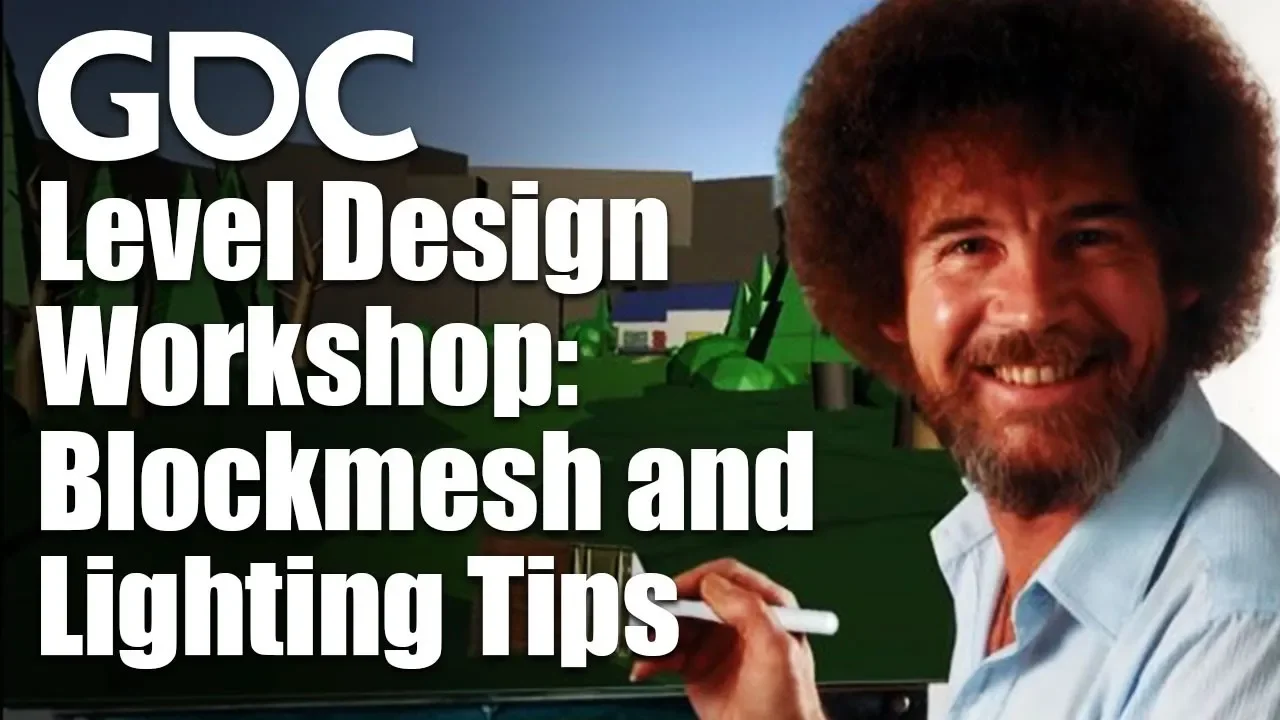 56:35
56:35Blockmesh and Lighting Tips
David Shaver / Robert Yang · GDC 2018
adamgryu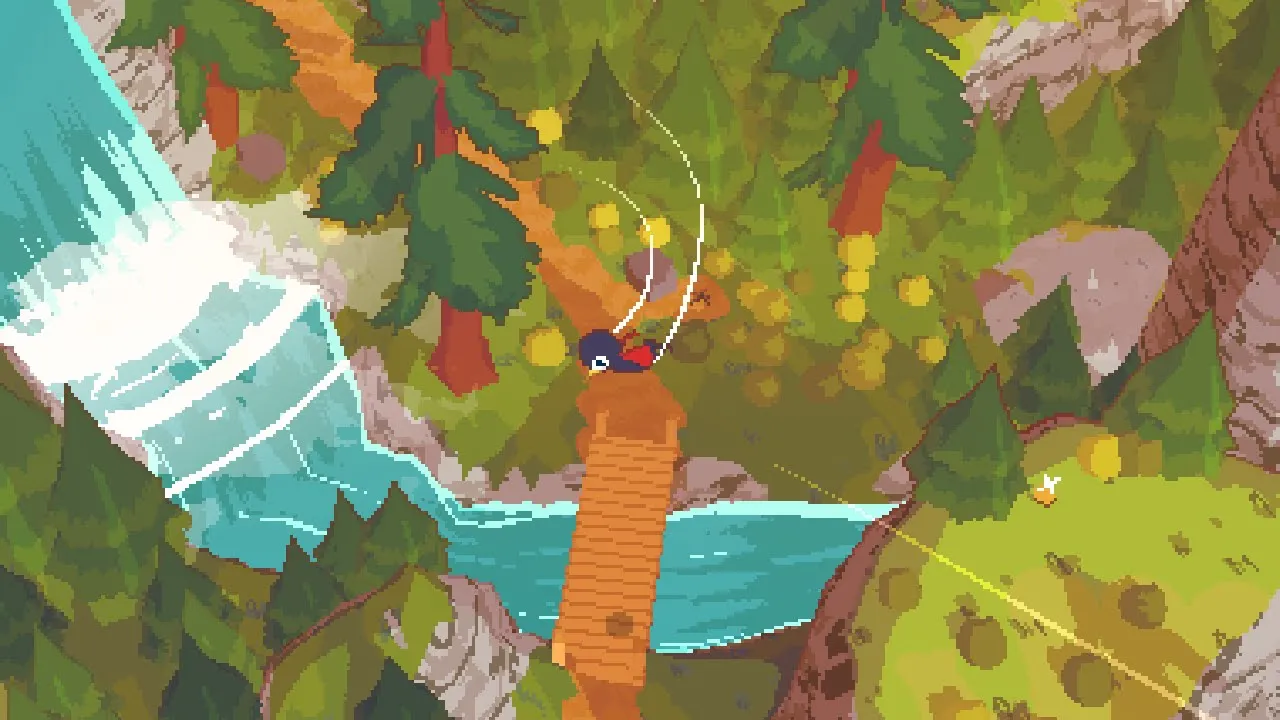 0:55
0:55A Short Hike · Official Trailer
Adam Robinson-Yu · Official video
Campo Santo Productions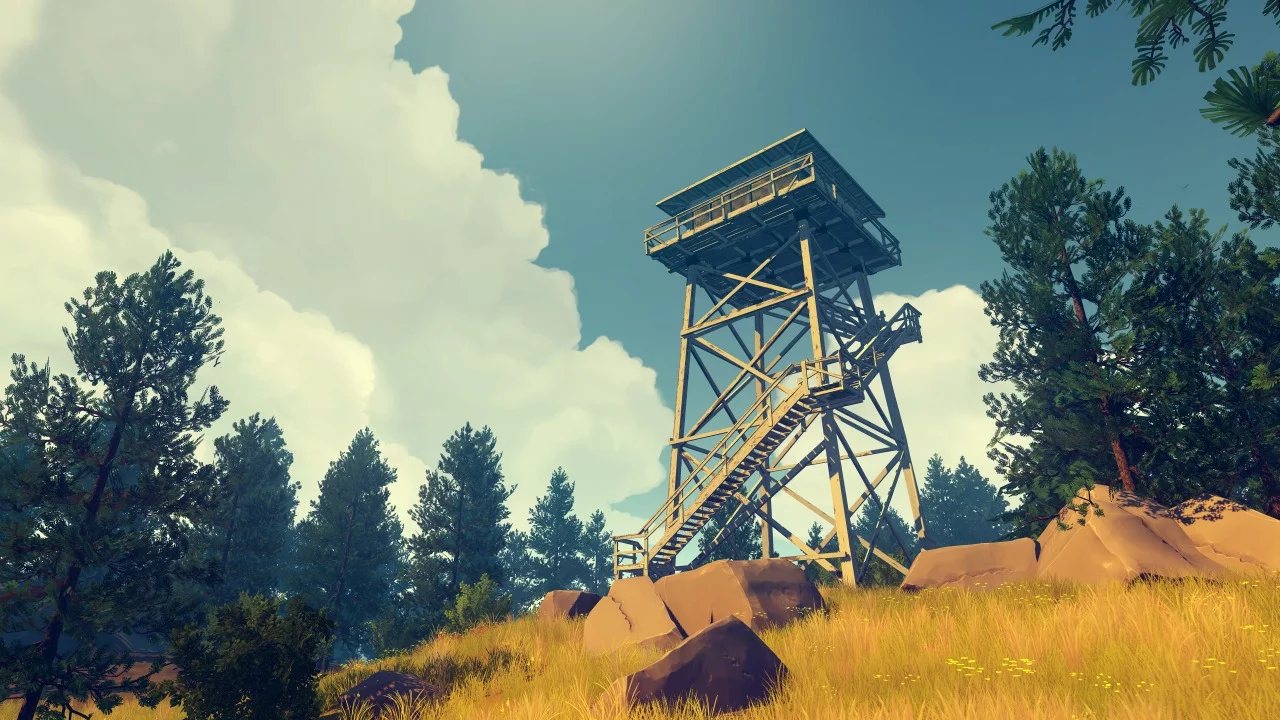 1:05
1:05Firewatch · Official Trailer
Campo Santo · Official video
Firewatch · Environmental Storytelling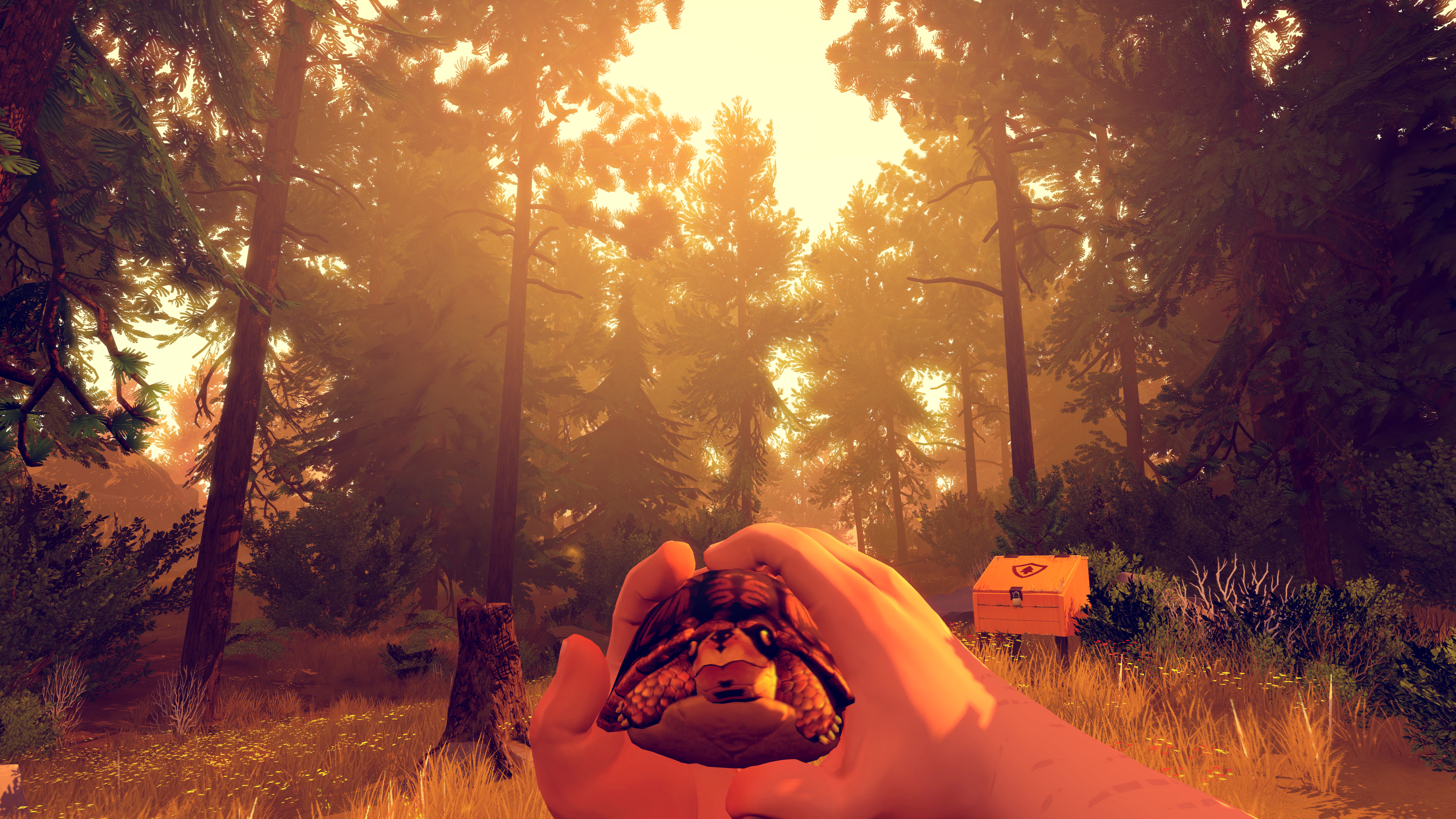
Campo Santo · Official screenshot · Viewpoint and environmental detail
Firewatch · Maps and Orientation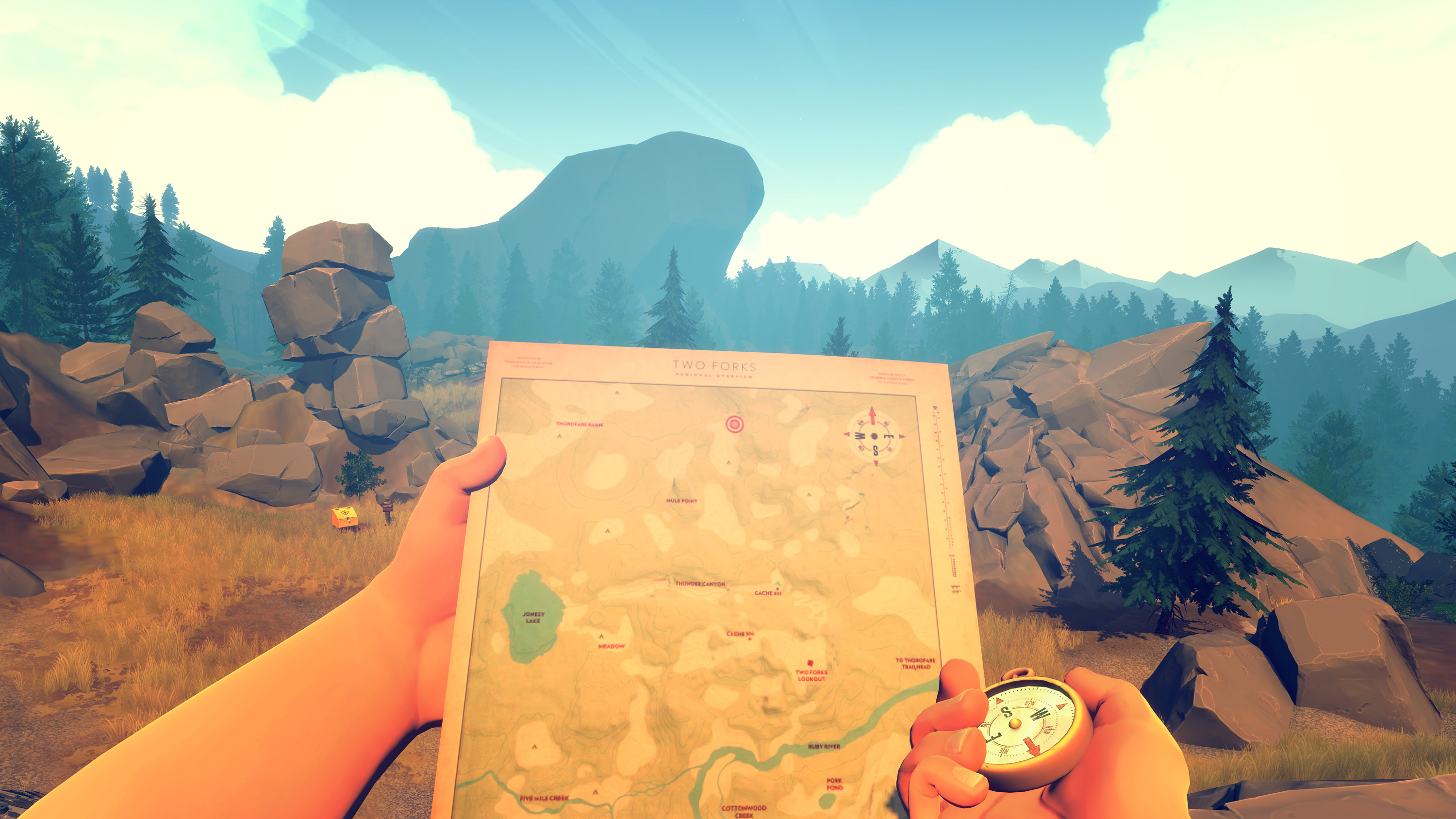
Official screenshot · Compare the paper map with environmental cues
What Should the Prototype Control?What Should the Prototype Control?
Design task
Keep the goal, scene scale, movement speed, and accessible areas constant.
Change only one set of landmarks, composition, or lighting cues.
Show that both conditions can be completed before comparing the experience.
From Records to InterpretationFrom Records to Interpretation
Analysis task
Routes and recordings → code events.
Questionnaires and interviews → understand the experience.
Keep both consistent and conflicting evidence.
Do not discard negative experiences because one route looks compelling.
Questions for My Supervisor This WeekQuestions for My Supervisor This Week
Discussion checklist
Is the research question too broad?
Are the operational definitions clear?
What is the strongest competing explanation?
Should I narrow the scene first or run a pilot?


 27%
27%

Drag to select · Right drag to pan ?